
Livestock Risk Protection (LRP)
Protect Your Livestock Earnings From Declining Prices
LRP protects against a decline in market price between the time you buy coverage and the time you sell your cattle — like a price floor for your calves or feeder cattle, without needing a futures account or broker.

Protects Your Revenue from Sudden Market Drops
Scales to Fit Small Farms and Large Ranches Alike
Simple and Direct Protection
How it works:
LRP is a price protection tool, not a yield or weather policy — it protects against the risk that cattle prices drop between now and when you plan to sell.
Here's the basic process:
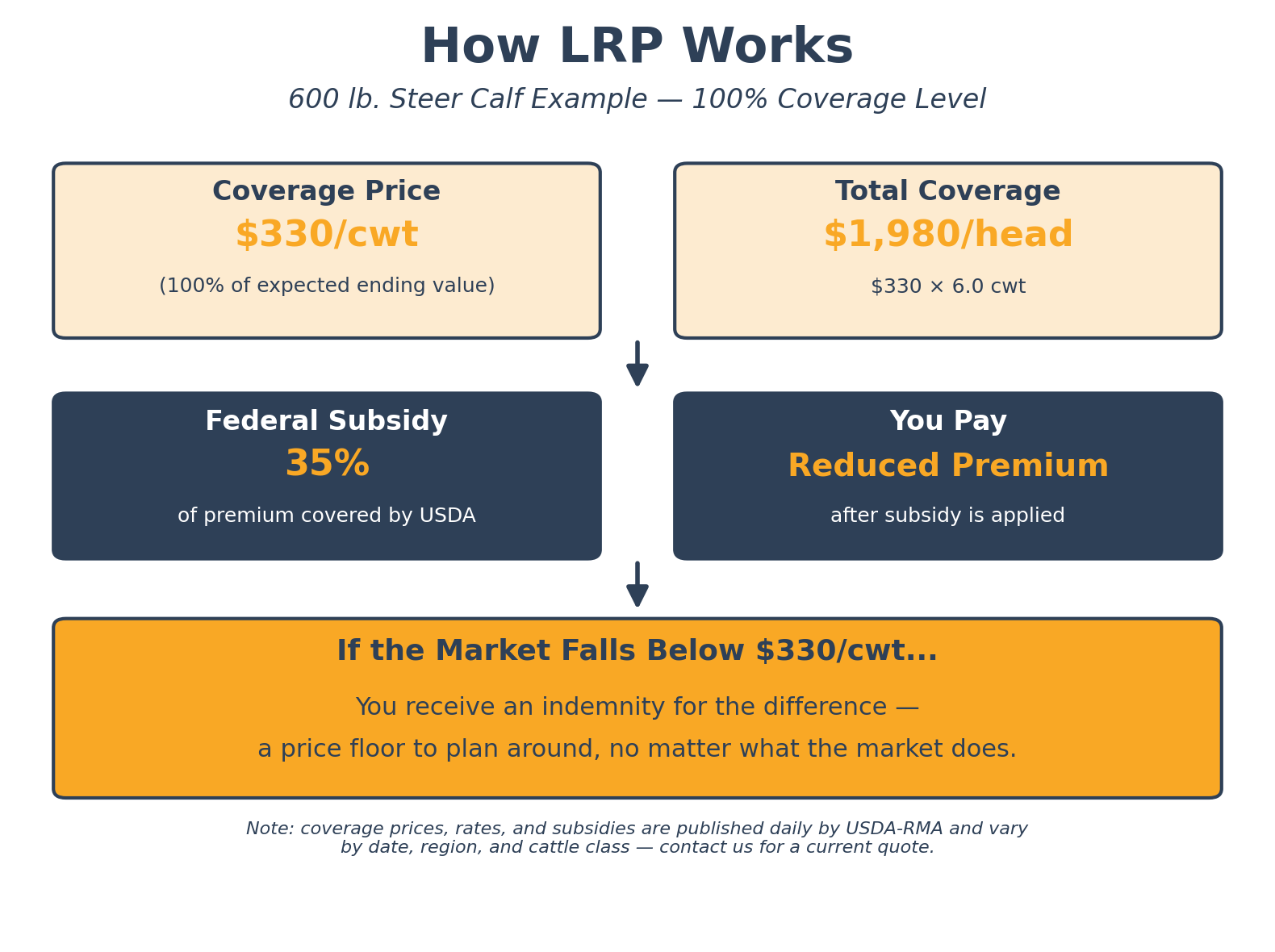
Choose your coverage. You select the class of cattle (feeder cattle, fed cattle, or unborn calves), the number of head, and a coverage price — essentially the price floor you want to lock in.
Pick your end date. LRP policies run for a set period (typically 13–52 weeks), matching the date you expect to sell.
USDA subsidizes part of the premium. The federal government covers a portion of your premium cost — the percentage depends on the coverage level you choose, with lower coverage levels receiving a larger subsidy.
You pay the remaining premium. This locks in your price floor for the specified head of cattle through your chosen end date.
At the end of the coverage period, prices are compared. If the actual ending value falls below your coverage price, you receive an indemnity payment for the difference — right on your bottom line, no claim inspection or loss adjustment required.
Unlike futures or options, there's no brokerage account, margin calls, or market timing required — just straightforward price protection built around your actual cattle and your actual timeline.